Electrical Safety Checks Every Homeowner Should Know
Every home hums with hidden energy. Flip a switch, your world lights up. But behind the scenes, silent threats can spark without warning. At TD Electric, we’ve seen firsthand how quickly a small problem can become a dangerous one.
Electrical safety isn’t just about peace of mind—it’s about protecting your family, your home, and your future. Let’s walk you through the essentials every homeowner should know.
Why Regular Electrical Safety Checks Matter ⚡
Wires age. Outlets loosen. Appliances near you work overtime. Most issues remain out of sight, quietly building up risk. The National Fire Protection Association (NFPA) reports that electrical failures are a leading cause of home fires—often completely preventable with routine checks.
Think of your electrical system like the heart of your home. If something’s off, everything else can suffer. Regular checks help catch problems early, avoiding costly repairs or emergencies later.
Quick Electrical Safety Checklist
Stay on top of your home’s safety with these simple steps:
- Inspect Outlets & Switches: Are they warm to the touch? Loose? Discolored? These are red flags.
- Check Cords: Look for fraying, cracks, or pinched spots, especially behind furniture.
- Test Smoke & Carbon Monoxide Detectors: Press the test button monthly; change batteries every six months.
- Examine Surge Protectors: Overloaded or old surge protectors can fail when you need them most.
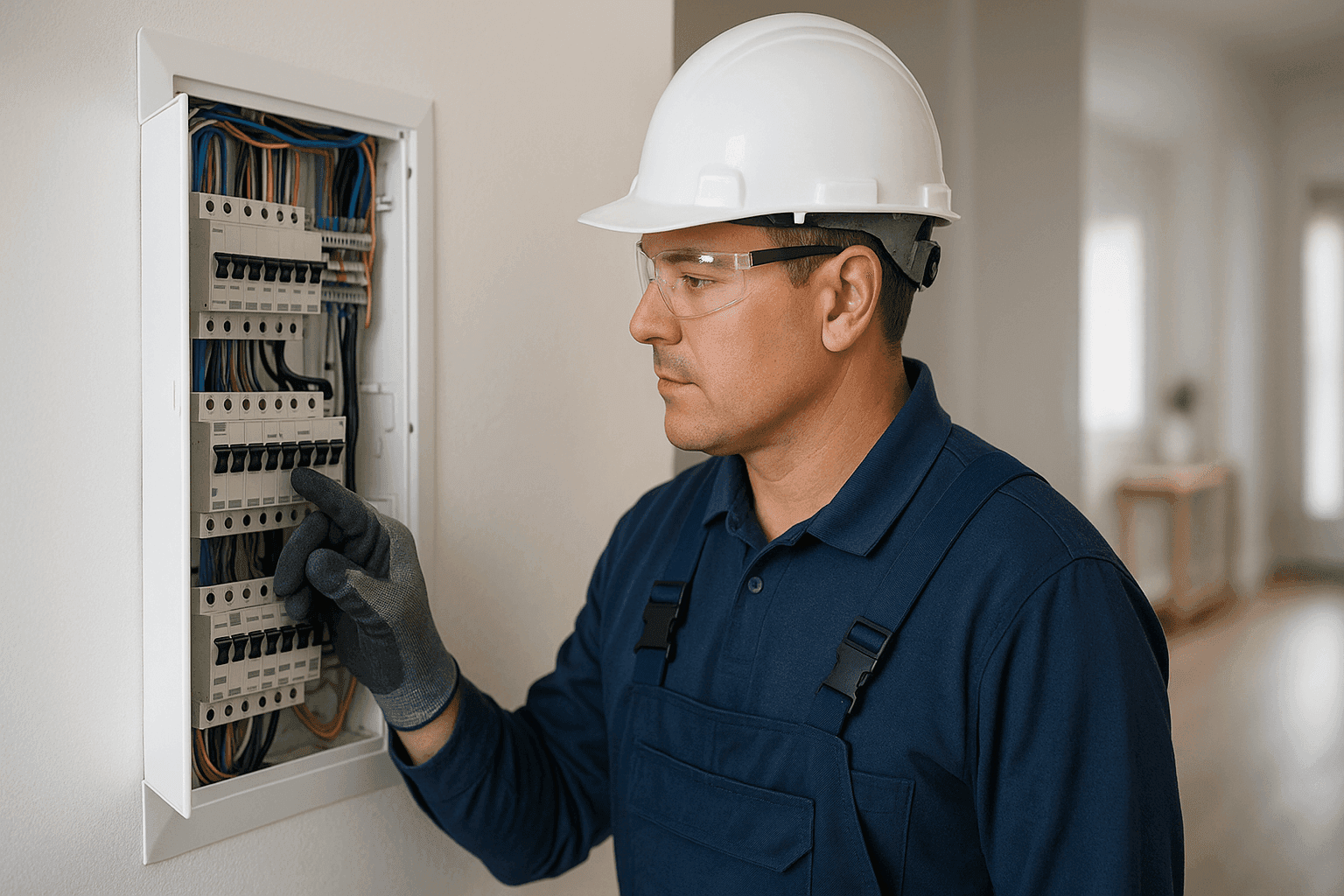
- Check Your Electrical Panel: Labels clear? No rust or scorch marks? Tripped breakers happening often?
- GFCI Outlets in Wet Areas: Kitchens, bathrooms, laundry—test these monthly to prevent shocks.
- Ceiling Fans & Light Fixtures: Wobbling or flickering can mean loose wiring.
- Extension Cords: Only for temporary use. Never daisy-chain multiple cords.
If you spot anything unusual, don’t ignore it. A small spark can lead to a big fire.
DIY Checks vs. Professional Inspections
Some checks are safe for homeowners. Others, not so much.
What You Can Safely Do
- Plug and unplug appliances to check for loose sockets.
- Reset tripped breakers—but only if you know why they tripped.
- Replace light bulbs and batteries in detectors.
Where the Line Is Drawn
Opening your electrical panel? Rewiring outlets? Diagnosing persistent breaker trips? That’s where you stop. Electricity isn’t forgiving—what seems like a simple fix can turn dangerous fast.
The Electrical Safety Foundation International (ESFI) recommends that homeowners schedule professional inspections every 3–5 years, or after major renovations, flooding, or if your home is over 40 years old.
Top Warning Signs of Electrical Problems 👀
- Frequent Breaker Trips: More than once a month spells trouble.
- Flickering or Dimming Lights: Especially when using appliances near you like space heaters or microwaves.
- Buzzing or Crackling Sounds: From outlets, switches, or walls—never a good sign.
- Burning Smell: Like melting plastic or ozone, often near outlets or the panel.
- Sparks: Even a tiny one when plugging in is a big warning.
- Discolored Outlets or Switches: Brown, black, or scorched marks mean overheating.
Never ignore these signs. They’re your early warning system.
Seasonal Safety Tips for Storms and Holidays
Weather and holidays strain your home’s wiring in unique ways.
Storm Season
- Expect outages: Invest in backup generators and have them inspected yearly.
- Surge protection: Strong storms can fry sensitive electronics. Whole-home surge protectors offer the best line of defense.
- Water & Electricity: After flooding, never touch outlets or panels—call an emergency electrician immediately.
Holidays
- Overloaded Circuits: Holiday lights and extra cooking appliances push circuits to the limit.
- Extension Cords: Don’t run them under rugs or doors—this wears down insulation.
- Outdoor Lighting: Use only outdoor-rated cords and fixtures.
A little caution can prevent holiday disasters.
When to Call a Licensed Electrician
There’s a time for DIY, and a time for trained hands. Call an electrician if you:
- Smell burning or see smoke near outlets or the panel.
- Experience repeated breaker trips with no clear cause.
- Find discolored or warm outlets, switches, or cords.
- Lose power to part of your home—especially after a storm.
- Plan major upgrades, like appliances, pools, spas, or EV chargers.
Not sure if it’s urgent? It’s always safer to ask. Emergency electrician services are available 24/7.
What Professional Electricians Do On Arrival
- Full System Assessment: Visual inspection, thermal imaging, and voltage checks.
- Code Compliance: Verify everything meets National Electrical Code (NEC) and local standards.
- Testing Critical Devices: Smoke detectors, GFCI outlets, surge protection, and backup generators.
- Panel & Circuit Diagnosis: Checking for loose wires, corrosion, and capacity issues.
- Clear Recommendations: No jargon—just practical steps for repairs or upgrades.
You get a clear picture of your home’s safety. And a plan to keep it that way.
Prevention & Maintenance
Stay ahead of trouble with these habits:
- Schedule electrical safety inspections every 3–5 years.
- Upgrade old wiring, especially in homes built before 1980.
- Install arc-fault and ground-fault protection as required by the NEC.
- Replace damaged outlets, switches, and cords immediately.
- Keep appliances near you serviced—frayed cords cause fires.
Routine maintenance is like oil changes for your car. Skip it, and you risk bigger problems down the line.
Costs & Time Factors
- Inspections: Usually take 1–3 hours, depending on home size and age.
- Small Repairs: Fixing an outlet or replacing a breaker is quick—often under an hour.
- Upgrades: Panel replacements, rewiring jobs, or generator installs are bigger projects, sometimes spanning several days.
Remember, catching problems early is always less expensive than waiting for an emergency.
When It’s an Emergency 🚨
Don’t wait if you notice:
- Smoke, sparks, or a burning smell.
- Power loss after flooding or storms.
- Outlets, switches, or panels that are hot to the touch.
- Repeated shocks—even mild ones—from appliances or fixtures.
Call an emergency electrician right away. Your safety is too important to risk.
Frequently Asked Questions
How often should I have my electrical system inspected?
The ESFI recommends every 3–5 years, or after major renovations, storms, or if your home is over 40 years old.
Are power surges really that dangerous?
Yes. Surges from storms or utility issues can destroy electronics, damage wiring, and even cause fires.
Is it safe to reset a tripped breaker?
Once, yes—if you know why it tripped (like a hairdryer overload). If it keeps tripping, call a professional.
Can I replace outlets or switches myself?
Only if you understand how to turn off the right breaker and follow safety codes. Otherwise, call in a pro.
Local and Seasonal Considerations
Across the country, weather patterns and local codes shape electrical risks. In humid or coastal regions, corrosion creeps in faster—especially around pools and spas. In areas prone to storms or wildfires, surge protection and backup power become critical.
No matter your location, regular safety checks keep your home ready for whatever comes next.
Electrical safety is an ongoing job—but you don’t have to do it alone. If you’ve spotted warning signs, need a safety inspection, or face an emergency, TD Electric is here for you, day or night.
Call TD Electric now — or reach us anytime at 877-708-5326 .